OST-EUROPA-MOTORRADTOUR #59: Plitvicka Seen, wo bereits Winnetou schwamm

Einem Tipp folgend fuhr ich ins Landesinnern. Und wieder folgte mir die Sonne zu einem bezaubernden Ort, dem Plitvicka Nationalpark. Die Wälder und Seen der Gegend bildeten in den 1960er Jahren die Kulissen von Winnetou Filmen. Der Reiz der Landschaft zeigte sich im Herbstkleid der Natur und im strahlenden Sonnenschein noch stärker als erwartet. Klares Wasser fliesst in mehreren Kaskaden in saubere, dunkelblaue Seen, umrahmt von goldenen Wälder. Mehrere Stunden wanderte ich auf gut ausgebauten Pfaden von See zu See und von Flüssen zu Wasserfällen.

OST-EUROPA-MOTORRADTOUR #25(a): Chernobyl; Check-Points, verlassene Dörfer und ein neuer Sarkophag

Punkt 8:00 Uhr Abfahrt von Kiew, hiess es. Wenn aber der Reisebus erst um 5 vor 8 erscheint und die Teilnehmer nach gebuchten Touren kontrollieren muss, wird’s kaum klappen. Dafür schafften wir es pünktlich zum morgendlichen Berufsverkehr in die Innenstadt. Immerhin war ein kurzer Stopp zum Kaffee tanken eingeplant. Der musste reichen bis zum ersten Check-Point an der 30km-Zone um den verunfallten Atomreaktor.  Hier wurden alle Pässe kontrolliert und mit den Genehmigungen verglichen, die die Reiseagentur im Voraus besorgen musste.

Bei der nordukrainischen Stadt Chernobyl kam ein Reaktor eines Atomkraftwerks in der Nacht vom 26./27. April 1986 ausser Kontrolle und explodierte. Die Folgen waren katastrophal und auf der ganzen Welt zu spüren, bzw. messbar. Radioaktives Material verbreitete sich und machte die nächste Umgebung des Katastrophengebiet für mindestens 20’000 Jahre unbewohnbar. Alle Bewohner innerhalb 30 km wurden evakuiert. Verlassene Dörfer und ganze Städte, allen voran die Stadt Pripyat, die nur knapp drei Kilometer vom explodierten Reaktor lag.

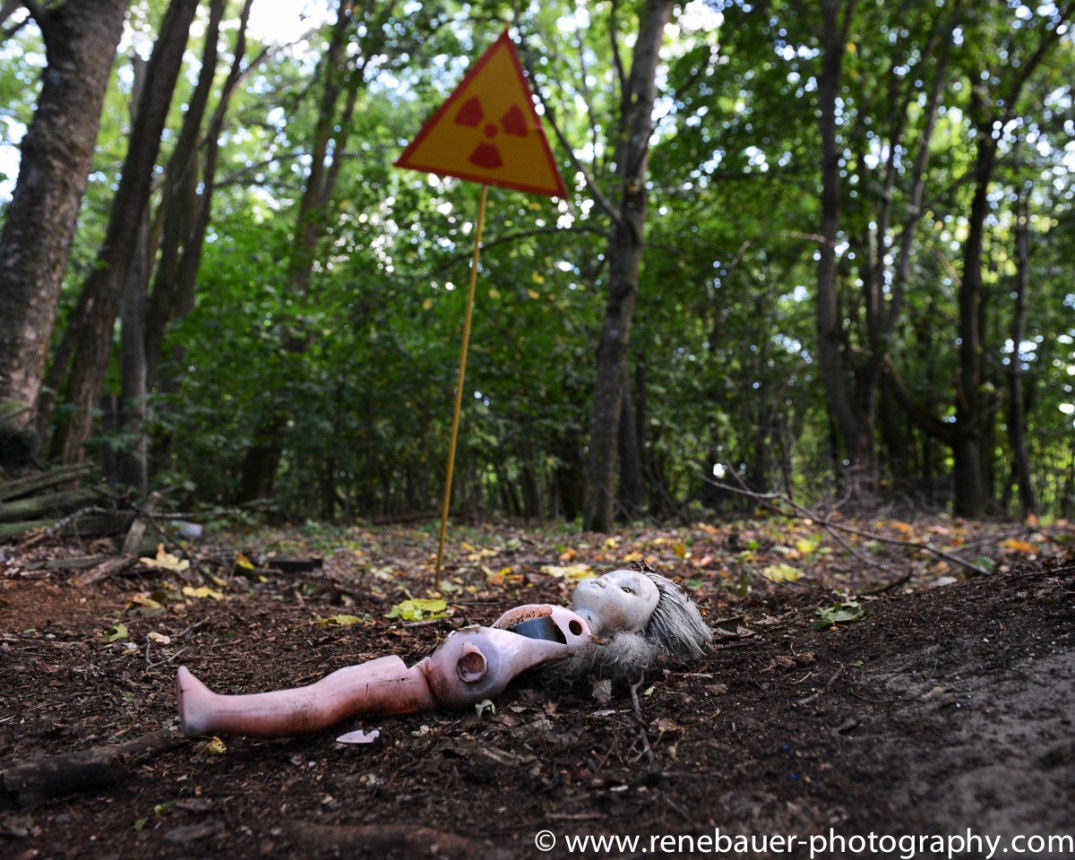
Die ersten Besuche galten verlassenen Dörfer, ihre einfallenden Häuser und düsteren Schulen. In Kindergärten zeugen zurückgelassene Puppen und Schulbücher von ihrer Vergangenheit. Die Natur erobert sich langsam wieder ihr Territorium zurück.

Natürlich gibt’s auch Mahnmale, Gedenkstätte und Erinnerungstafeln, die das Unvergessliche in Erinnerung behalten wollen. Schon fast idyllisch mutet die Umgebung der Kirche an. Sanfte Sonnenstrahlen lassen die Trauben reifen, die wie alles hier, aus einem radioaktiven Boden wächst. Auch die Lenin Statute aus der Zeit der Sowjetunion strahlt ruhig vor sich hin. Selbstbewusst und trotzig steht sie da. Während alle andere Lenin Statuen der Welt gestürzt wurden, darf sie hier weiter vor sich hin strahlen.

Die Spannung steigt mit der Dosis der empfangenen Gammastrahlung. Wir nähern uns der Unfallstelle vor 31 Jahren. Schon von Weitem glitzert der neue Sarkophag silbrig in der Sonne. Nach der Katastrophe wurde eiligst ein Betonbunker über den strahlenden Reaktor errichtet. Dieser musste aber durch eine bessere Lösung ersetzt, bzw überbaut werden. In jahrelanger Arbeit wurde eine Hülle erbaut, die dann über den noch immer strahlenden Reaktor geschoben wurde. Hier eine Animation: https://www.youtube.com/watch?v=6wso-xD0FnU

Der Geigerzähler, der die Radioaktivität misst zeigt noch immer gut über 1.0 msv/h an. Normalwerte sind zwischen 0,1 und 03 msv/h.


OST-EUROPA-MOTORRADTOUR #19: Zu Fuss unterwegs

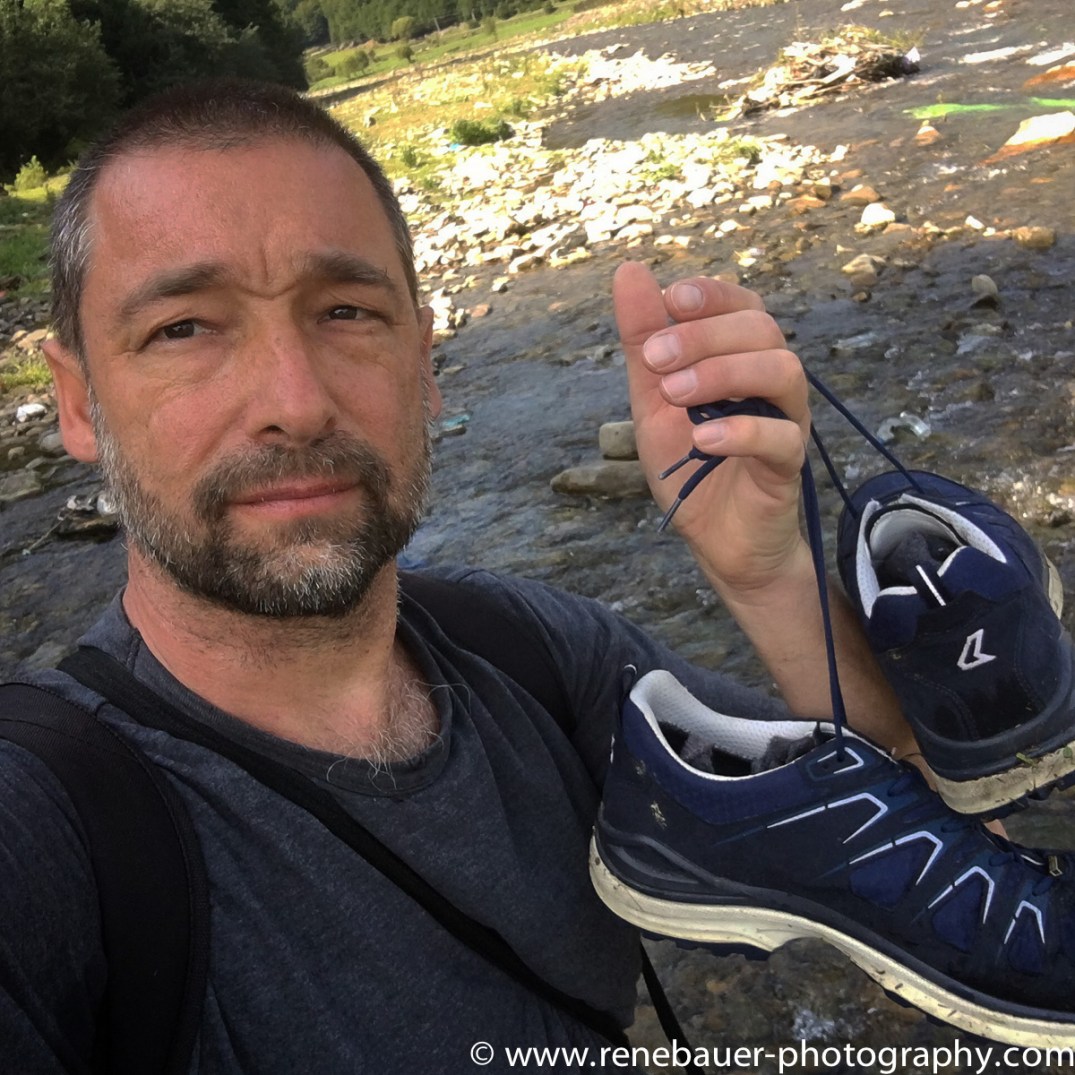
Wandern kann man das wahrscheinlich nicht nennen, aber ich wollte zumindest einen grösseren Spaziergang ins zwei Kilometer entfernt Dorf machen. Eine wackelige Hängebrücke bot sich an, einen Umweg via der anderen Flussseite zu machen. So stapfte ich mit meinen Sportschuhen, die eigentlich für Stadtrundgänge gedacht waren, durch die Felder und kurze Waldabschnitte. Vielerorts war der Boden morastig aufgeweicht, wo schweflige Quellen aus dem Boden rinnen. Hinweisschilder in Kyrillischer Schrift machen auf irgendwas aufmerksam. Vielleicht über die Geschichte, der nahen Tunnels, die während des Krieges gebuddelt wurden. Vielleicht aber auch ein Warnschild oder einfach ein Gruss an allfällige Wanderer.

Ich folgte dem Fluss. Einzelne Pferde weiden frei auf der saftigen Wiese, während andere sich in Koppeln sammeln. Als der waldige Berg bis zum Flussufer kommt ist Schluss. Entweder den Wald hochkraxeln oder durch den Fluss waten. Ich entschied mich für letzteres.

Die eiskalten Füsse steckte ich drüben wieder in Socken. Nun ist’s nicht mehr weit bis zum Dorf Kolochava. Die ersten Bewohner, vier Männer in unterschiedlichem Alter, sitzen auf Holzbrettern am Fluss und trinken Bier. Sie verstummen als ich näher kam und beäugen mich. Ich grüsse. Fast scheu grüssen sie zurück. Im Dorf begegne ich dieselbe Zurückhaltung. Entweder man geht mit starren Blick geradeaus an mir vorbei, oder ich ernte skeptische Blicke. Dabei sollten sich die Einwohner Touristen gewohnt sein. Viele Tschechen, Polen und Rumäne, aber auch Deutsche verirren sich gerne in dieses schöne Wandergebiet. Ich trinke Kaffee auf dem Dorfplatz und lasse das beschauliche Leben auf mich einwirken. Später finde ich ein Restaurant, in dem mich die Deutschlehrerin über die Geschichte der Gegend informiert und mir sogar Touren anbietet. Leider habe dazu keine Zeit, erwidere ich, zu eng ist mein Zeitplan gesteckt. Immerhin reicht die Zeit und das Tageslicht vor meiner Unterkunft noch, um einige Seiten zu lesen.

Murchison Falls National Park

The tremendous costs to visit the Murchison Falls National Park on my own was doubting me to visit the park. But then i got the offer to take a local car with driver to enter the park cheaper. At least to have a glimpse on the spot where Ernest Hemingway crashed with his plane, survived and got picked up by a tourist boat. To be close where Audrey Hepburn was staying and acting for the „African Queen“. Seeing the ruins of one of the residences of Idi Amin, the cruel dictator of prior days. But yes, also the wildlife, although i kept my expectations low. And there is still the waterfalls, after which the park is named.

Driving trough a huge, dense forest with big families of baboons and monkeys, we heading towards the Victoria Nile. Many colorful kingfisher birds flying off when we passed by. A ferry brings us to the other side with different landscape. A savannah with high dry grass. Buffalos glancing at us, antelopes grazing, hippos chilling in the Nile while socks and other birds stalking in the water. Many animals just given birth and keep their babies closely. On the way back we stopped by the great falls. Tons of water squeezed in a narrow valley, fall over several cliffs with big spray and get quite again on the way to Lake Albert. At end of the day, i have to admit it was worth the visit.

Hide And Seek With Chimps

Just behind the basic campsite the rainforest starts. It’s packed with wildlife, primates and exotic plants. A lush green wall of leaves and wood hides them for an easy sight. And by the way, it’s called rainforest for a reason, so i started the first morning with my guide in pouring rain. After four hours hiking trough dense jungle we gave up. The next day we’ve been bit more lucky. High in the treetop were some chimpanzee to see. To observe and photographing them wasn’t easy due the distances and the bad light conditions. The hike itself was worthwhile anyway, and some other primates as baboons, blue monkeys or black and white colobus monkeys showed up too.

Rwanda – Nyungwe Forest

A dense jungle on both side of the road. A few times a steep slope gives the view free over the green, lush forest. Morning mist crawls up. Despite my early start this morning, i was too late for the chimpanzee tracking. A canopy walk would be an option, but too pricey. I decided to go for a guided hike instead. With only my guide, i walked trough the huge green. He explained about the plants, spotted some smaller animals, as frogs, birds and also mountain monkeys. A bat flew off when we approached its hide too close and some squirrel crossing in high speed our path. Not quite an adventure, but nice hike after cities and long road drives.

Lake Naivasha Impressions

Despite the many, noisy people who shared the campsite, i enjoyed the long weekend at Lake Naivasha. A few photo impressions:

Photo Shooting In Forest

A nearby forest was a quite and perfect location for a short photo shooting with Marie.

Tanzanian Maasailand (part 1)

It’s a little while since, but i don’t want hold back the pictures from my last Tanzania trip any longer. After the safari tour to Serengeti and Ngorogoro crater with – a rather disappointing – safari tour operator. I was happy to continue traveling with my own car and pace. On the safari tour i met two young tourist girls, who wanted to go to Daressalam too. I offered them to join me trough Maasailand instead of a boring, long bus ride direct to Dar. They agreed for sharing fuel and food.

The day before departure, the three of us went to local market to buy food. It’s hard bargaining if one goes with typically dressed tourist girls to the food stalls. Somehow we managed to get our supplies, as the girls told me about their appointment with the owner of the safari company we went days before. The same guy who cheated me and gave false informations to me, was inviting those young girls for pizzas and swimming pool at the most expensive hotel in Arusha and paid them even their room in a backpacker hostel. I joined the girls for that appointment and got at least a pizza myself and some relaxing hours with wifi at the pool at „Mt Meru Hotel“. The pizza was tasty, the pool refreshing and the view of Mount Meru splendid.

The first day traveling didn’t brought us very far, but to a wonderful oasis i knew from earlier visit. Hot spring and pool with crystal clear water was a delight after a dusty road trip. Since we supposed to travel as friends, the girls had to help with cooking while i pitched their tent for the night. With the highest mountain of Africa – Mt Kilimanjaro – we camped just next to the hot spring.

On the next day, we got deeper in Maasailand, with no specific route, just follow south on dusty roads. We passed some huts and villages which seemed to be abandon. Some kids lead cows somewhere, looking bewildered as we crossed their ways. The rain brought much green food for their cows. For us was it easy to find a quite place to camp in that lush, green bushland and enjoy a peaceful sunset.

Petrified Forest

I talked about the desert elephants and how rare they’re to see, as i noticed a car parking next to the gravel road. And yes, the couple in that car spotted two elephant bulls roaming in nearby bush. Along the road we’ve been lucky with more attractions as a black cobra, once alive since there are many dead snakes on the road, more of the unique welwitschia plants or huge termite hills.

A guide explained the origin of the wood and how it came many thousands years ago down to Nambia, covered by mud and clay and turned slowly to minerals and stone. The colors, the structure of the bark and even the year rings look still like the wood, but if you touch it you feel cold, hard stone.