home of good hope

Guiding my mom and her husband trough Namibia, i didn’t only want show the touristic spots of the country, but also bring them closer to real life. A soup kitchen project in Katatura/Windhoek supported by my friend Barbara, was a good start.

In the „Home Of Good Hope“ approx. 600 children daily get food, explains Monica, the founder of project. When we arrived groups of children, some in school uniforms, waited in front of the house from corrugated iron sheets. Under the eyes of helpers the kids washed their hands in bucket filled with soapy water before entering the big gloomy room.  Inside wooden banks were provided, sorted in rows like in a church. Monica and her few helpers clapped in their hands and started to sind church songs with the kids, doing little daces with them, cheering them up to praise the lord, although there is no differences made by religions of the kids coming in. The only difference is made by school kids, who gets served first because the have to be in school on time. Four Swedish girls came in to help serving the simple, but  nourishing meal. They’re in Windhoek as exchange from nursing school and volunteering the soup kitchen today. In front of the building was a table with watery juice and apples cut in small pieces.

We brought from children clothes from home. Immediately they were sorted and given to kids attending this morning the soup kitchen. Some wear it with proud when the left the building. Amongst other things i discovered boxes for first aids, and indeed, a boy came with a wound on his leg. One of the helper cleaned the wound, put desinfection fluid on it and covered it. All in completely routine. Still all the laughter in our ears we left that place with good impressions.

Marangu’s village life

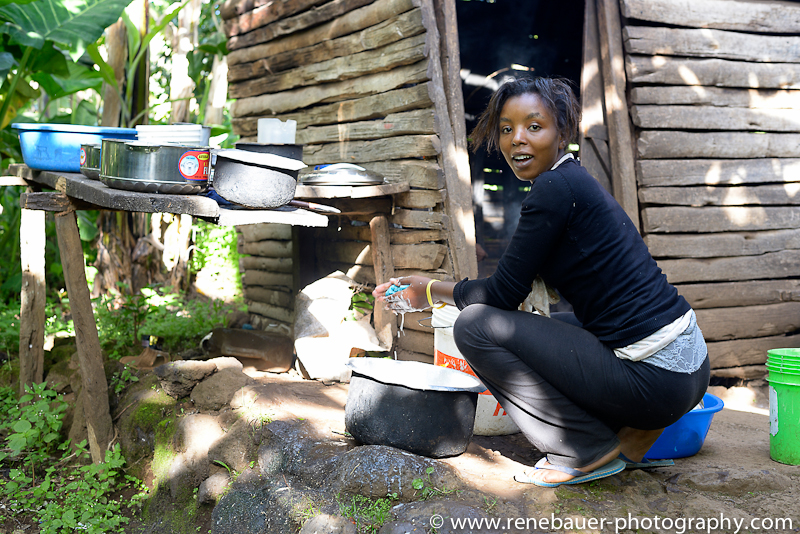
Marangu. There’s not much to say, but only to enjoy that calm, tranquil village on foot of Mt.Kilimanjaro. For a long weekend i could enjoy the hospitality of these friendly people and had a little inside of their daily village life.

public transport in Tanzania

A weekend out of town with two nice German guys. Nora, a friend of a friend, want show us her village in a more remote area. Just to travel to the foot of Kilimanjaro from Arusha is an experience itself. No, not an expedition, as many western visitors call any step they do in Africa, but daily life experience in a normal-crazy-traffic-way.

Lucky to find the express-bus almost empty, we got a seat at the back. All seats were occupied pretty quick and a western guy considered it „full“. But not the Tanzanian bus driver. As he drove off, every few meters he stopped again to take more passengers till they stand tightly packed in front of my camera lens. Surprisingly quite in the bus, but then my neighbors start to talk and laugh with me. Humor and patience also needed if a passenger from the back has to crawl all the way trough the crowd to get to the front door.

Dala-dala, are the mini bus version for shorter distances. Short in terms of just a few hours. Squeezed like fishes in a tin, i start to sweat and smell like a fish too. The sound of the engine, that thin, rattling ironskin of the vehicle and the bumping movements on uneven roads makes me smile. Not because it’s funny, but out of upcoming fear and images of accidents i saw on the road. And indeed, a sudden shot, a blast let the dala-dala slinger. Lucky the driver could stop at the side of the road without anybody get harmed. A tyre puncture is very common, and having a look on the tires, no one wonders why.

Where the data-dala stops, are only taxis or moto-taxis, so called „toyos“, which brings one further. Our taxi driver couldn’t afford the latest model of a car, nor a proper repair or replacement of broken parts. Anyway, the look trough the spiderweb-like windscreen has its own character.

Arrived on foot of Kilimanjaro, the only way to go further is by foot itself …until the highest point of Africa, for people who want give themselves the challenge and are willing to pay a big amount of money for the fees and tour agencies. For those who decid to climb the mountain very spontaneous can hire the gears just at start point. The three of us are just happy to get a coffee at Nora’s place and have a rest.


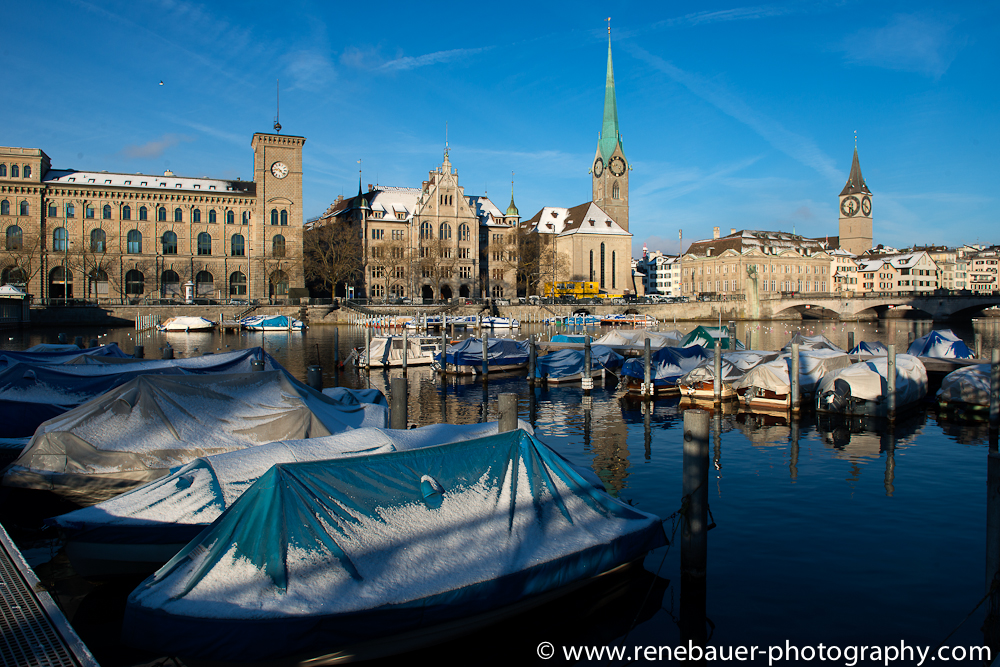
Best of – Zurich

A series of quit recently made pictures from zurich

Japanese Gastronomy

Having a meal isn’t just put food in your body, but a social happening in Japan. It’s the time to discover the many facets of Japanese dishes as well as meeting people and talk business or just gather for a chat.

Einfach Essen in seinen Körper stopfen ist nicht sehr japanisch. Im Gegenteil; Das Essen wird als soziales Treffen zelebriert, wo man sich Zeit nimmt um Geschäfte zu besprechen oder einfach eine gute Zeit unter Freunde verbringt.


Bathing Japanese Style / Baden auf japanisch

It’s rather ironically i couldn’t visit and photographing more ‚Onsen‘, as Japanese call their typically bathing places. Around Yufuin are many hot springs, therefore it’s famous for many public bathing places. Often they are settled in lush gardens, midst in a forest or surrounded from rocks. Sulfuric steam crawle over the ground, damp air rise above a volcanic area, when approach one of the Onsen. Three wooden walls and a roof are attached around a traditional hot bath area. After cleaning with a bucket shower, the visitors sit in more than 40°C hot water. Some young students from Tokyo share the bath with me. They came all the way just for a relaxed weekend in some Onsen here. „But i also like girls“, confess one of them. A shame women are usually separated since people use to enter an Onsen naked. Some families have their own bath. The hot water is collected from the source into tanks, from there pipes leads to private houses or small public bath. Of course there’s also bathrooms in Ryokan (traditional Guesthouses), some of them very nice settled towards garden. A must to end the day with a hot, relaxing bath.

Yufuin und seine Umgebung sind berühmt für die heissen Quellen und will noch mehr Bekanntheit als Kurort erlangen. Da ist es schon fast Ironie, dass ich nicht noch mehr traditionelle Bäder -‚Onsen‘ genannt- besuchen und fotografieren konnte. Einige davon sind wunderschön in dichten Gärten gelegen, mitten im Wald oder in Felsen eingebaut. Weiter oben in den Bergen stinkt es nach schwefligem Dampf, der von vulkanischem Untergrund hochsteigt. In der Nähe befindet sich eine Hütte, dessen hintere Wand offen ist. Nach dem Betreten, zieht man sich aus und reinigt sich erst mit der Duschbrause oder Eimer. Sauber steigt man dann in das über 40°C heisse Badewasser. Hier gesellen sich ein paar Jungs aus Tokyo hinzu, die eigens für ein relaxtes Wochenende herflogen. „Aber ich mag auch Mädels“ gab ein Student mit verschmitztem Grinsen zu. Diese sind aber in eigens für Frauen vorgesehene Badebecken. In den Ortschaften haben einige Familien ihre eigene Oasen. Das heisse Quellwasser wird in Reservoirs gesammelt und von dort aus in Leitungen verteilt. Wer über kein eigenes Bad verfügt, kann sich für wenig Geld in einem öffentliches Bad relaxen. Natürlich haben die Ryokan, die traditionellen Gasthäuser, eigens Oasen für ihre Gäste. Nichts ist herrlicher, als am Ende des Tages noch in heisses Bad zu steigen.


Shiitake – Japanese mushrooms

At breakfast i found this popular Japanese mushroom on my plate – shiitake. If literally translated the meaning is tree-mushroom. To the explanation follows an offer to see a mushroom farm. Fifteen minutes later i sat on a taxi to greenhouse. Piles of wood with white dots are stabled in a large room. These dots are little drill holes, where the mushroom get vaccinated in. With the right temperature and humidity, the shiitake spreads out the wood and get harvested after about six month. It’s not only a delicious adding to the rich Japanese food, but also a very healthy one.

Beim Frühstück bemerkte ich Pilze auf meinem Teller. Der in Japan beliebte Speisepilz -Shiitake- heisst übersetzt Baumpilz. Und auf Holzstämme wächst er auch, lasse ich mir erklären. Spontan wird mir angeboten, eine Pilzfarm zu besuchen. Kurz darauf befinde ich mich im Taxi dorthin. In Gewächshäuser stapeln sich Holzstämme mit auffällig weissen Punkten. Diese Punkte markieren die Bohrlöcher, wo das Holz mit Pilzsporen geimpft wurden. Danach werden sie in Gewächshäuser unter idealen Bedingungen, Temperaturen und Luftfeuchtigkeit gelagert bis die Pilze aus dem Holz spriessen. Etwa sechs Monate braucht es bis zur Ernte. Roh, gekocht oder getrocknet bieten sie eine leckere Ergänzung zum japanischen Speiseplan und soll auch noch sehr gesund sein.

Livingstonia Mission

Dusty road under our feet leads us up to Livingstonia, a missionary station. Despite the remote place, that town is grown to a remarkable size. People greeting us along the streets, shop owner ask for our needs and a friendly man shows us the church. Not far from the church is the university. It’s holiday time and looks almost bit ghostly with its deserted halls and shattered glass windows. A young sit alone in a classroom, learning for exams, he explains. Back on the main street, children waving us, playing in the dust. Adults are sitting in front of shops, playing with marbles, working on houses or doing their laundry in nearby river. We’re stunned about the weights the people use to carry on their heads, or the work they do by making bricks. Time passing by so quick by observing the daily life here.

Eine staubige Strasse unter unseren Füssen führt uns hoch nach Livingstonia, ein alter Missionsort. Diese abgelegener Ort entwickelte sich zu einer erstaunlich grossen Stadt. Ein Museum, das Krankenhaus und die grosse Kirche zeugen noch stark von der Vergangenheit als Missionsstation. Daneben gibt’s hier aber nun auch eine technische Hochschule und eine Universität. Die hallen und Klassenräume sind leer und wirken durch offene Türen und eingeschlagenen Scheiben verlassen. Es sind Schulferien, wird uns erklärt. In einem der Räume treffen wir einen Studenten an, der hier in der Ruhe für ein Examen lernt. Mehr Leben finden wir zurück auf der Strasse, wo Kinder spielen oder Erwachsene ihrer Arbeit nachgehen. Wir werden freundlich gegrüsst. Hie und da wird uns erklärt woher der Mais kommt, wie die Ladenbesitzer zu ihren Güter kommen oder wie die Lehmziegel gemacht werden. Ein historischer Ort, in dem das heutige Leben so nah zu beobachten ist.

Mauritius; Mahébourg

Roaming trough the streets, the people nod at me, are friendly, talkative and helpful. I learned not only from the local Naval Museum, but also from fishermen, restaurant owner and carpenter. Here some impressions:

Durch die Strassen geschlendert und viele Begegnungen gemacht. Ob Fischer, Restaurantbesitzer oder Schreiner, sie alle sind nett, gesprächig und hilfsbereit. Eine echte Freude hier das Leben zu beobachten. Hier einige Eindrücke:

Obdachlos in Kapstadt / Homeless in Capetown

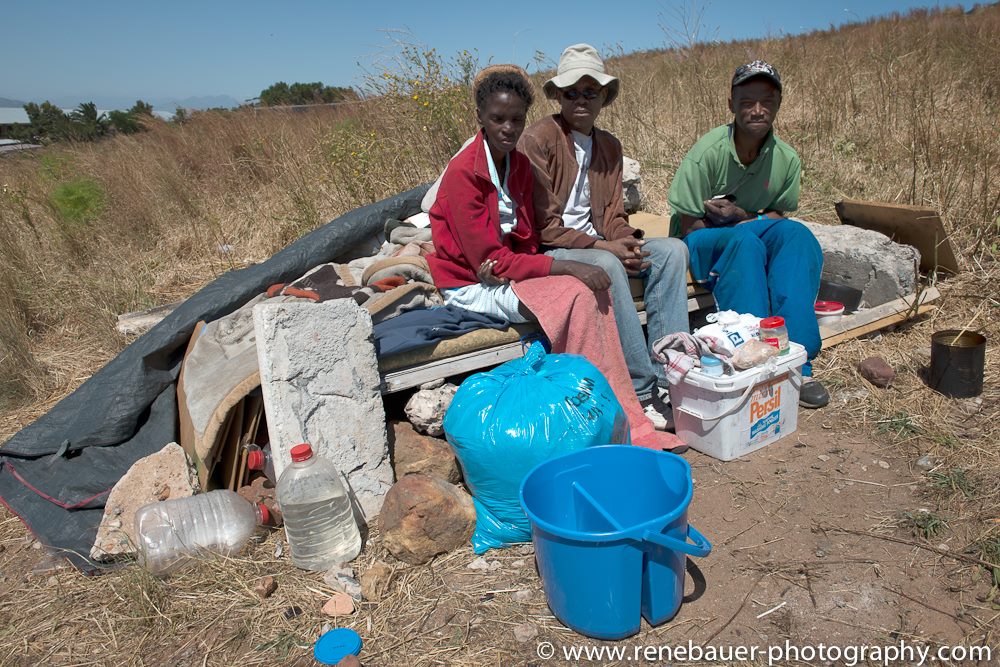
Robert winkt mich zu sich und stellt mich seiner Schwester Juliana und ihrem Freund Archi vor. Die Drei wohnen im ehemaligen „District six“, das 1966 vom Apartheid Regime niedergerissen wurde. Das friedliche Zusammenleben von Leuten aller Hautfarben war den Behörden ein Dorn im Auge und gegen ihre Idee einer Rassentrennung. Noch immer sind grosse Fläche gleich ausserhalb der Innenstadt unbebaut und werden von einigen Obdachlosen bewohnt. Im hohen Gras, das Reste früherer Bauten und Strassen überwächst, nisten sie sich auf Sperrmüll, alten Matratzen und rissigen Planen ein. Juliana ist krank und schwach. Ihr Bruder zeigt mir ihre Patientenkarte und erklärt mir, dass er sie regelmässig zur freien Behandlung ins Spital bringt. Essen sammelt er auf der Strassen der Stadt zusammen. Auch Archi wird im Spital behandelt, zückt zur Bestätigung ein vergilbten Ausweis hervor. Im Sommer lässt sich hier, am Rande der Zivilisation, einigermassen leben. Wenn’s aber kalt wird müssen sie 100 Rand (ca. 8 Euro) pro Woche und Person zusammenbringen um in den Schlafsälen der Stadt unterzukommen.

Robert, his sister Juliana and her boyfriend Archi saw me strolling around at the former „district six“ and invited me in their „home“. District six was famous for its peaceful neighborhood with all colors and races. In order of the ideology of Apartheid it has to be eradicated and inhabitants of this area has been separated in different townships according to their races. Since then, the area was more or less deserted. Big patches of land are still overgrown with high grass. Overgrown the old streets, houses and past life. Here is now the home of a bunch of homeless people, who struggle with the daily life on the edge of civilization. What they need for living, the have to find on street and when cold or rain comes in, have to build a shelter from old plastic. How are the winters, i asked. There is a homeless shelter in town, but costs 100 Rand (ca. 8 Euros) per Person per week, which they have to try to get somehow.